Loading...

Arabic 1 — Instructor-Led Course for Independent Learners

$149

Spring 2026 registration is now open. Classes begin the week of January 12.

14 weeks of Zoom classes and online course materials. Less than $11.00 per class! 

Accelerated beginning level Arabic language and culture course for adult learners, developed by Carnegie Mellon University faculty for students with an intense desire to learn the language.

Participants can earn a certificate of completion if they meet the requirements.

Description

Elementary Arabic 1 is designed for beginner Arabic learners who have no background in the Arabic language and wish to learn how to read and write Modern Standard Arabic (MSA) and speak the Egyptian and/or Levantine dialects.

The course structure is designed to help motivated students read and write the Arabic language and learn about Arab culture. It consists of 2 Units that are completed over 14 weeks. Unit 1 consists of five themed and content-based lessons (7 weeks) that include videos on how to write the Arabic alphabet, while focusing on speaking functional Arabic and learning basic grammar. Unit 2 contains two themed and content-based lessons (7-8 weeks) that delve into more contextualized themes with readings, recording of those readings, and dialogue videos shot in Egypt with Egyptian and Syrian actors to provide an authentic background. The videos in Unit 1 are in Egyptian dialect, and in Unit 2 in MSA, Egyptian, and Levantine dialects. No additional books or materials are needed for the course.

In the instructor-led course, you will have a weekly synchronous Zoom class (60-minutes) in which you will get the opportunity to practice your Arabic speaking, grammar, and vocabulary skills with your peers. You will also receive weekly emails from your instructor with suggested pacing for moving through the lesson materials. Additionally, you will be able to email your instructor with any questions you may have about the course.

To successfully use this course, you should be a motivated adult student (aged 18 and up) with a sincere desire to learn about Arabic language and arabophone cultures, and be comfortable with computer technologies. Elementary Arabic 1 is a great place to brush up on your Arabic or begin your Arabic learning journey from scratch.

To receive a Certificate of Completion in this course, you will need to score at least 70% on each of the the end of lesson assessments. To be awarded a Certificate with Distinction, you will need to score at least 90% on each of the end of lesson assessments. Attending the weekly course meetings and doing the auto-graded exercises throughout each lesson will help prepare you for success on the end of lesson assessments.The time commitment will typically range from seven to nine hours a week.

Lesson structure:
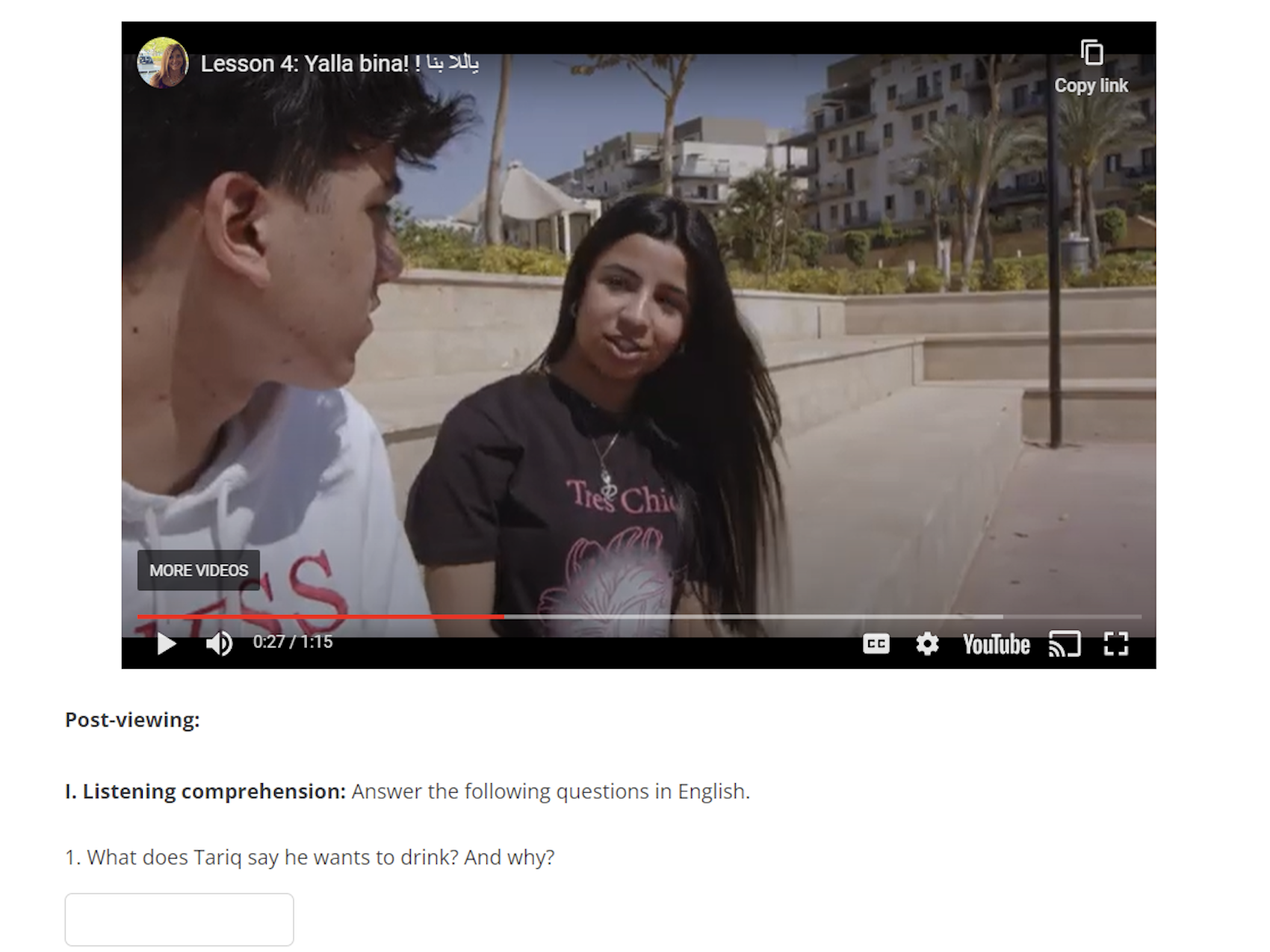
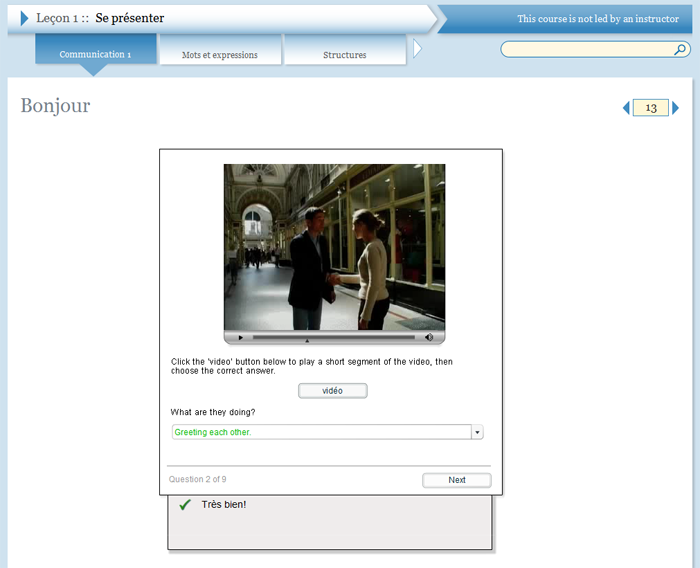
Each lesson opens with a video that aims at teaching social interactions with a focus on the lesson’s theme. It includes audio-popup vocabulary, Quizlets, listening, speaking and writing exercises (Multiple Choice, Drag n Drop, Matching, Dictation, etc…), videos by native speakers, AI-generated videos designed for story-telling, role plays, writing and creativity using AI, a more elaborate writing prompt in Unit 2, culture, music, and an assessment. All can be submitted on Torus. Most practice exercises can be self-corrected using automatic feedback. Each lesson also concludes with answer keys for all practice exercises, including open-ended questions.

Additional software or materials required:
You will be required to use videoconferencing software, such as Zoom, which you will be able to use for free with the link that your instructor provides you.


Instructor-Led Course Features

Instructor-Led Courses

$97per student
  • Instructor-led OLI courses enable independent learners to study a subject over a 14-week period with a weekly live class on Zoom with their instructor and peers. Courses are:

    Taught by a Carnegie Mellon University Instructor
    Not self-paced. There will be weekly deadlines and students will complete approximately one lesson per week.
    Include a certificate of completion

  • Includes the learning materials and assessments, weekly live class on Zoom (60 minutes), weekly emails, and the ability to contact the instructor for questions

  • Certificate of Completion (70% or more on exams) or Certificate with Distinction (90% or more on exams) available to learners meeting the requirements

  • *If your teacher gave you a Course Key, do not use an Independent Paid course because your teacher will never see your work.

Important Dates

You can enroll in Arabic 1 — Instructor-Led for Independent Learners at any time through January 24, 2026.

  • Start date: January 17, 2026
  • End date: May 1, 2026

NOTE: Please visit the Zoom class schedule tab for information on your live Zoom meetings.

Zoom Class Schedule

Meet with your instructor and peers via Zoom:

  • Saturdays from 10-11am Eastern Time (ET)

Use a time zone conversion tool to convert this to your local time.

What students will learn

By the end of this course, students will know how to greet, introduce themselves and others, and describe their studies, work, family, feelings, food and beverages, living spaces, visits, travels, places, hobbies, and the weather. 

Learning objectives by module

By the end of Lesson 1, students will be able to:

  • Greet formally and informally, introduce yourself, tell where you are from, and respond to others.
  • Read and write the letters ا ب ت ث و ي .
  • Distinguish between the roles of the long vowels ا و ي and short vowels fatha َ, damma ُ, kasra ِ .
  • Use the subject pronouns “I and you (male, female, and plural).” 
  • Distinguish between the different types of physical and verbal greetings in the Arab world.
  • Locate the 22 Arab countries on the map.

By the end of Lesson 2, students will be able to:

  • Ask and respond to “How are you?” 
  • Read and write the letters ج ح خ د ذ ر ز
  • Count numbers 0-10
  • Become familiar with the significance of the cultural expressions that use the word “God” and the expressions that use numbers. 

By the end of Lesson 3, students will be able to:

  • Say that you are a student and where you study
  • Express your likes and what you like to drink
  • Read and write the letters س ش ص ض ط ظ
  • Count numbers 11-20
  • Learn about meals and visit etiquette.

By the end of Lesson 4, you will be able to:

  • Express feelings and preferences
  • Read and write the letters ع غ ف ق ك 
  • Count numbers 20-100 
  • Learn the effects of the short vowels shadda and sukuun on letters
  • Culture: Appreciate the aspects of diversity in the Arab world

By the end of Lesson 5, you will be able to:

  • Tell your age
  • Express possibility and obligation
  • Read and write the letters ل م ن هـ 
  • Learn the sound of tanween ً ٍ ٌ – taa’ marbouta ة and feminine markerhamza ء – alif madda آ
  • Use the subject pronouns: he, she, they
  • Use possessive pronouns
  • Distinguish between the different expressions with “Allah” (cont’d)

By the end of Lesson 6, you will be able to:

  • Use vocabulary related to school and work
  • Distinguish between definite and indefinite nouns الإسم المُعَرَّف و الإسم النكرة
  • Use present tense conjugation الفعل المضارع and its negation: Live, Work, Speak, Study, Want
  • Ask questions using different interrogative pronouns السؤال
  • Use adjectives الصفة, including ones with إضافة, 
  • Compare conversations in MSA and dialect, 
  • Appreciate the importance of high school national exams in college placement.

By the end of Lesson 7, you will be able to:

  • Use vocabulary on daily activities and hobbies
    • Use a variety of adverb
  • Use the particle أن
  • Construct an إضافة
  • Revisit possessive Pronouns ضمائر الملكية 
  • Use days of the week أيام الأسبوع
  • Form masculine plurals: regular and irregular جمع المذكَّر و جمع التكسير
  • Revisit interrogative pronouns الأسئلة 
  • Appreciate the role of social & sports clubs النادي. 

 By the end of lesson 8, you will be able to

  • Use vocabulary related to food, beverages, shopping, and ordering food 
  • Form the future tense المستقبل 
  • Form adjectives with human feminine plural الصفة و المؤنث 
  • Form adjectives with inanimate plural الصفة و جمع التكسير 
  • Analyze the structure of a nominal sentence and its negation الجملة الإسمية و النفي 
  • Analyze the structure of a verbal sentence and its negation الجملة الفعلية و النفي 
  • Form object pronouns ضمائر النصب 
  • Appreciate the culture of food shopping, restaurants, and the socio-economic significance of bread. 

By the end of Lesson 9, you will be able to:

  • Describe the weather, seasons, and travel 
  • Express opinion
  • Use the verb “to be” كان in the past
  • Express reason using بسبب – لأن 
  • Use the demonstrative هذا – هذه 
  • Learn the months of the year 
  • Count from numbers 20 to 100 
  • Appreciate the culture of tourism and travel

Course assessments, activities, and outline

Listed under “Description” above.

Other course details

Estimated time to complete: one semester. 

November 2025

Author: Nevine Abraham

System requirements

OLI system requirements, regardless of course:

  • internet access
  • an operating system that supports the latest browser update
  • the latest browser update (Chrome recommended; Firefox, Safari supported; Edge and Internet Explorer are supported but not recommended)
  • pop-ups enabled
  • cookies enabled

Some courses include exercises with exceptions to these requirements, such as technology that cannot be used on mobile devices.

This course’s system requirements:

  • If the student is working with an instructor in a distance-learning situation, chat environment and videoconferencing software.

Cost and payment options

$149 per student

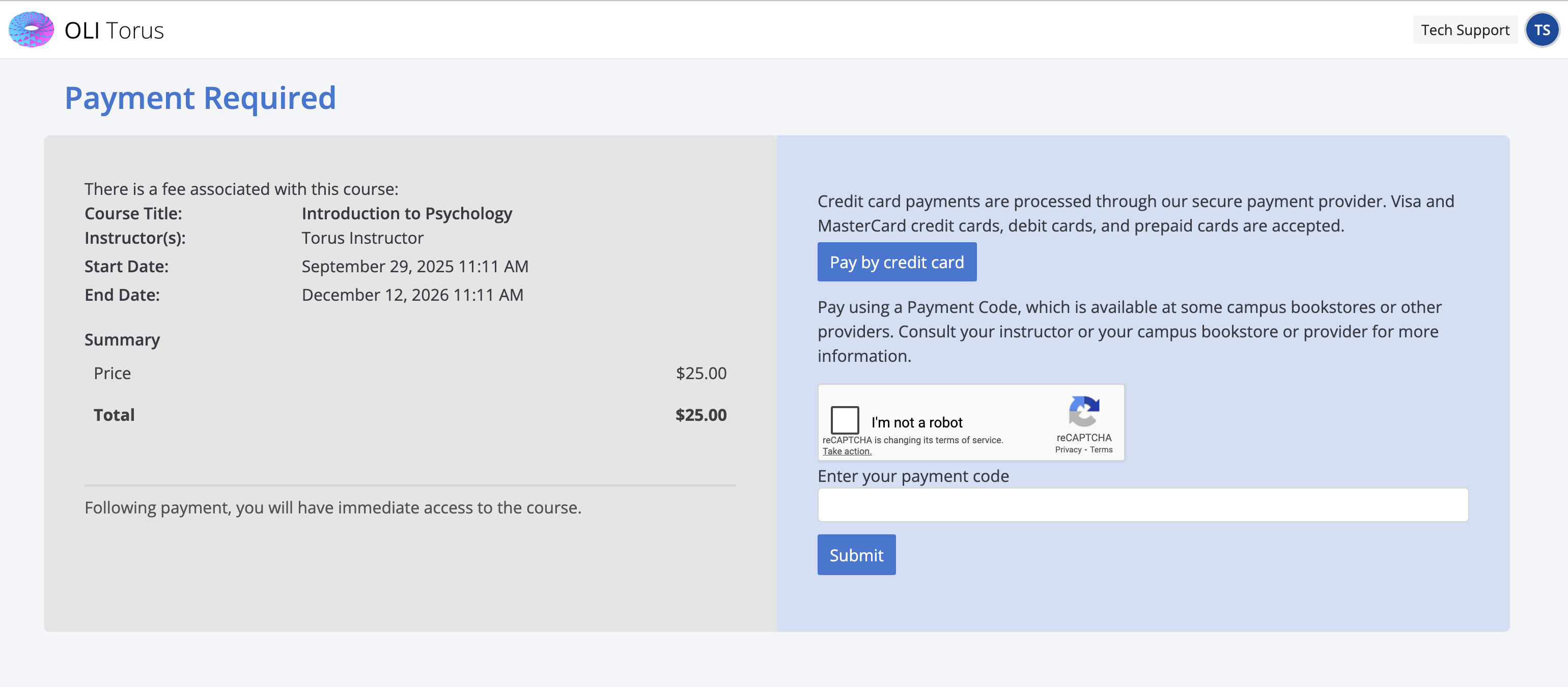
Students are prompted for payment during the OLI course registration process, and can pay with a credit card or an OLI Payment Code purchased from your campus bookstore.

The two payment options presented to students during their OLI course registration process: credit card payment or OLI Payment Code redemption.
Go to Top